Learn Lithuanian vocabulary with the Verba app
Lithuanian shares almost no vocabulary with English, never writes its stress down and changes the end of a noun to fit the sentence. That is a lot to carry for a word you saw once on a shop sign. Verba gives each Lithuanian word its stress, its forms and its sound, and brings it back on the day it starts to slip.
The Android app is on Google Play: it installs like any other, and the account, the words and the progress are the ones you already have.
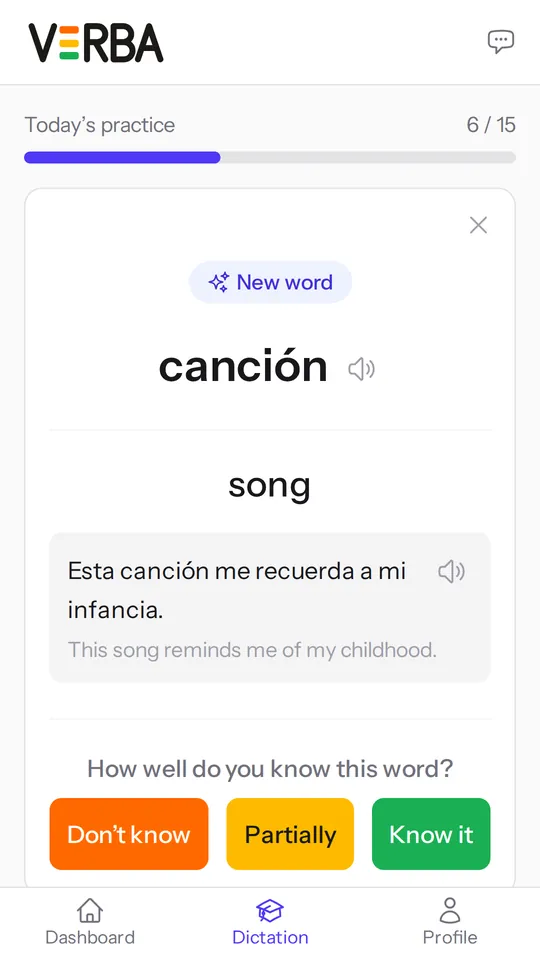
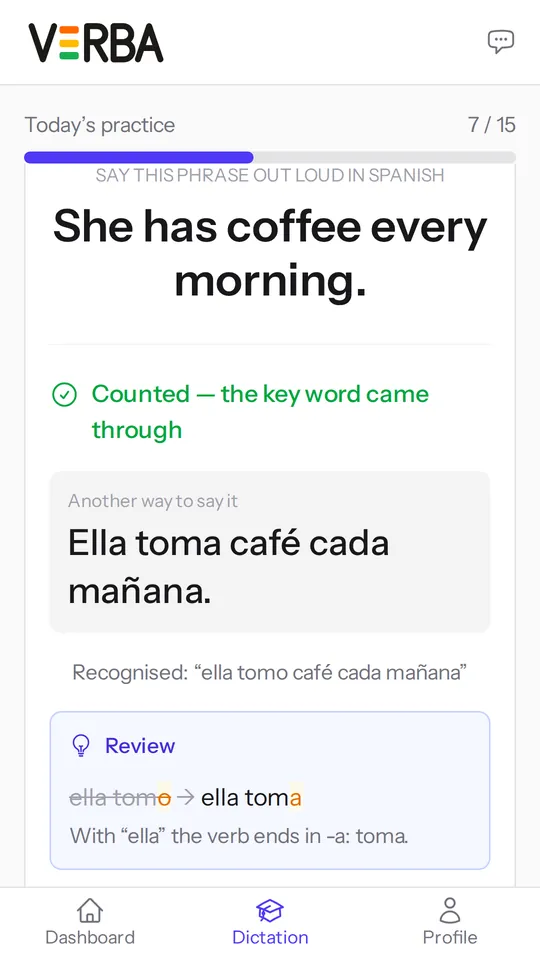
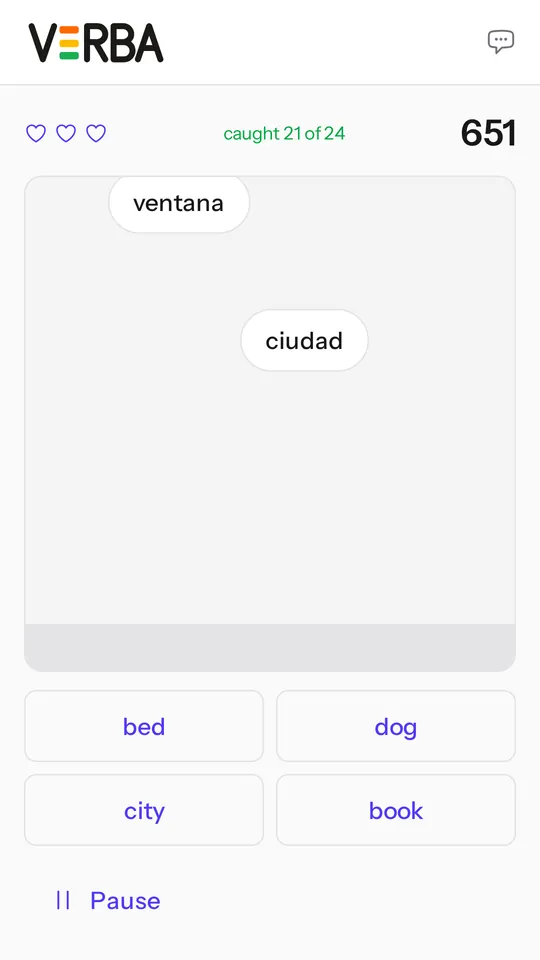
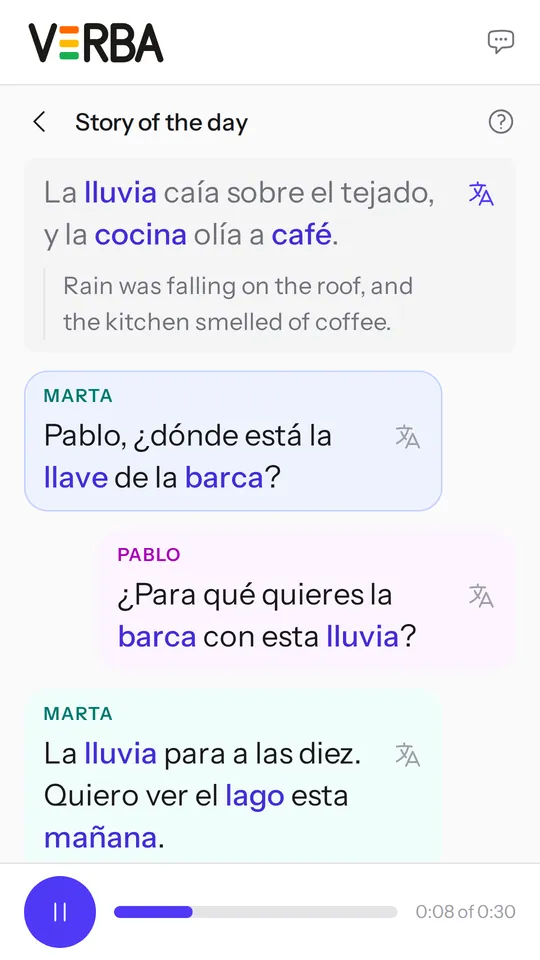
The screenshots show the Spanish course. Lithuanian works the same way, with stress marks and word forms on top.
Lithuanian words have no English cousins to lean on
A few old relatives survive: sūnus is son, naktis is night, nosis is nose. Past that short list, a Lithuanian word gives an English speaker nothing to guess from. Every word has to be learned rather than recognised, and that is exactly the kind of load spaced repetition is built to carry.
Some words split one English idea in two, and others pack two ideas into one. To go is eiti on foot and važiuoti by car, bus or train. Mokėti means both to pay and to know how to; pietūs is lunch and also south; aukštas is tall, and it is also a floor of a building. In Verba each word comes with an example sentence, so the context tells you which sense you are looking at.
Lithuanian stress you cannot see, forms you have to hear
Lithuanian stress is free: it can sit on any syllable and move as the word changes form, and ordinary text never marks it. Put it in the wrong place and a Lithuanian has to think twice before understanding you. Verba shows the stress mark on words where it has been checked against a dictionary, and every word has audio.
Nouns change their endings across seven cases, so the word you learned as miestas turns up as mieste, miestą or miesto. Each word page in the dictionary lists all its forms, and the example sentences use them in context rather than the dictionary form alone.
The letters count as well. Ą, č, ę, ė, į, š, ų, ū and ž are letters in their own right, and dropping the mark can turn one word into another. When you type an answer, Verba checks them as part of the word.
How Verba teaches Lithuanian words
Morning dictation. Each morning brings the words that are due: a couple of minutes and three buttons, don't know, partly, know. Answer "know" and the word waits four days, then ten, then twenty-seven. The app keeps the schedule.
Speaking out loud and the story of the day. As a word settles in, the exercise gets harder: first it is only shown, then you pick its meaning by ear, type it, and finally say a whole phrase into the microphone and see what the app heard. After the dictation, today's words come back in a short story at your level, read aloud and translated line by line.
Word catcher. A Lithuanian word falls, four English translations wait below, and you catch the right one before it lands. The wrong answers come from the same level, so guessing does not work. It trains speed and never moves your reviews.
The Lithuanian words already in
The Lithuanian dictionary in Verba holds 1278 words from A1 to C1, each with an English translation, an example sentence with its translation, and audio. Pick your level or take a short test. The lists are open without an account:
Frequently asked questions
Is there an app for learning Lithuanian on Android?
Yes: Verba is on Google Play, and the same account works on verbadaily.com, with the same words and the same progress.
Does it show where the stress falls in Lithuanian?
Yes, with a stress mark on words where it has been checked against a dictionary. Every word also has audio, so you hear where the stress falls either way.
Can I add words I met in Lithuania?
Yes, on the website. A word from a shop sign, a letter from the bank or a chat at work goes into the same dictionary, and Verba fills in the translation, the example, the level and the pronunciation.
Where should a complete beginner start?
At A1: family, food, the days of the week and the months come first. The cases arrive through example sentences rather than tables.
How much time does it take a day?
The morning dictation takes a couple of minutes. You decide how many words come each day; the app decides how many of them are new and spaces the reviews by how you answer.
Related: Learning Lithuanian as an English speaker
Words to start on
Every ready-made language has an open word list: meaning, pronunciation, forms and a real example on every page.
Your first Lithuanian words, today
Create an account on the website or in the app: the first dictation runs straight away, and tomorrow morning brings the words that are due.